
Key Specs of Fence Mesh Welding Machines
Fence mesh welding machines are essential tools in the manufacturing of welded wire fencing, providing durability and security for a variety of applications. When considering the purchase of a fence mesh welding machine, it’s important to understand the key specifications that can influence performance and suitability for specific needs. Here’s a detailed overview of the primary specifications to consider:
1. Production Capacity
Definition:
Production capacity refers to the volume of fence mesh that the machine can produce within a given time frame, typically measured in panels or meters per hour.
Importance:
Higher production capacity machines are essential for large-scale operations. They enable manufacturers to meet demand efficiently, reducing turnaround times and increasing profitability.
2. Wire Diameter Range
Definition:
This specification indicates the range of wire diameters the machine can accommodate, usually measured in millimeters or inches.
Importance:
A versatile machine capable of handling various wire diameters allows manufacturers to produce different types of mesh products, making it adaptable to various market needs.
3. Mesh Size Adjustability
Definition:
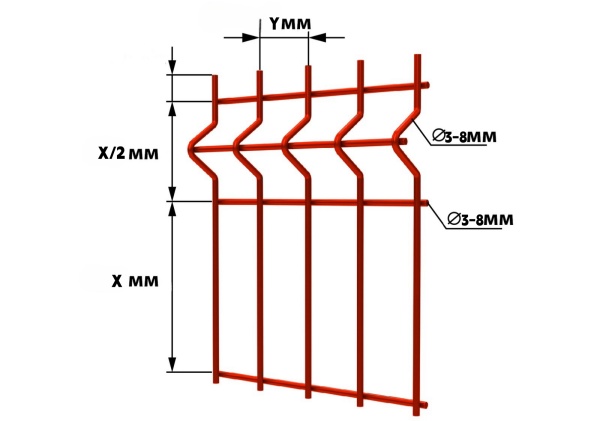
Mesh size adjustability refers to the ability to change the spacing between the wires, which affects the final product’s characteristics.
Importance:
Being able to adjust mesh sizes is crucial for fulfilling specific customer requirements and catering to different applications, such as security fencing or agricultural uses.
Key Specs of Fence Mesh Welding Machines
4. Welding Speed
Definition:
Welding speed indicates how quickly the machine can create welds between wire strands, typically measured in seconds per weld.
Importance:
Faster welding speeds can significantly enhance overall productivity. Machines with higher welding speeds can reduce cycle times and increase output without sacrificing quality.
The parameters of the Fence Mesh Welding Machine DP-FM can be referenced
Fence Mesh Welding Machine DP-FM
| Model | DP-FM-2500A | DP-FM-2500A+ |
|---|---|---|
| Line wire dia | 3-8mm | 3-8mm |
| Crosswire dia | 3-8mm | 3-8mm |
| Line wire space | 3-5mm, 50-300mm
5-8mm, 100-300mm |
3-6mm, 50-300mm
6-8mm, 100-300mm |
| Crosswire space | 12.5-300mm | 12.5-300mm |
| Max. mesh width | 2500mm | 2500mm |
| Max. mesh length | 6m | 6m |
| Max. welding speed | 120 times/min | 120 times/min |
| Air cylinder | 26pcs | 26pcs |
| Welding electrodes | 26pcs for 51 points | 51pcs |
| Welding transformer | 150kva*7pcs | 150kva*9pcs |
| Weight | 6.8T | 7.3T |
5. Control System
Definition:
The control system manages the machine’s operations, including settings for welding time, pressure, and temperature. Modern machines often feature digital control panels or PLC (Programmable Logic Controller) systems.All RKM brand Fence Mesh Welding Machines are equipped with PLC systems.
Importance:
An advanced control system allows for precise adjustments and monitoring of the welding process, ensuring consistent quality and minimizing defects in the final product.
6. Machine Dimensions and Weight
Definition:
This includes the overall size and weight of the machine, which can affect installation and mobility.
Importance:
Understanding the dimensions and weight is vital for planning workspace layout and ensuring that the machine fits within operational facilities. Additionally, heavier machines may indicate a more robust build quality.
7. Energy Consumption
Definition:
Energy consumption refers to the amount of power the machine requires to operate, usually measured in kilowatts.
Importance:
Energy-efficient machines can help reduce operational costs and are increasingly sought after by businesses looking to minimize their environmental footprint.
8. Safety Features
Definition:
Safety features include components such as emergency stop buttons, protective covers, and safety interlocks designed to prevent accidents during operation.
Importance:
Ensuring the safety of operators is paramount. Machines with comprehensive safety features help mitigate risks and create a safer working environment.
9. Material Quality
Definition:
This specification pertains to the materials used in the machine’s construction, which can include types of steel, components, and overall build quality.
Importance:
High-quality materials contribute to the machine’s durability, reducing maintenance needs and extending its lifespan. Investing in a well-built machine can lead to better long-term performance.
10. Price Range
Definition:
Price range varies widely based on the machine’s specifications, features, and manufacturer reputation.The advantages of RKM lie in its use of European technology and imported components, ensuring the quality of each machine while also providing the best value for money.
Importance:
Understanding the price range is essential for budgeting and ensuring that the chosen machine meets both operational needs and financial constraints.
Conclusion
When selecting a fence mesh welding machine, it’s critical to evaluate these key specifications to ensure that the machine aligns with your production goals and operational requirements. By considering factors such as production capacity, wire diameter range, and safety features, businesses can make informed decisions that enhance their manufacturing processes and improve overall efficiency. Investing in the right machine not only supports current demands but also prepares the operation for future growth and adaptation in an evolving market.
 English
 Russian
 Arabic
 Hindi
 Persian
 Portuguese
 French
 Panjabi
 Turkish
 Urdu
 Vietnamese
 Ukrainian
 Thai
 Kazakh
 Polish
 Romanian
 Danish
 Korean