
What do you know about wire straightening and cutting machines?
In today’s fast-paced industrial landscape, wires are everywhere—from reinforcing steel in construction and precision metal parts in manufacturing to decorative elements in home fixtures like fences and hooks. With the growing demand for high-efficiency processing, quickly transforming disordered or coiled wires into precisely sized, straight pieces has become critical. Enter the wire straightening and cutting machine, a core solution that not only boosts production efficiency but also plays a key role in waste reduction and material reuse.
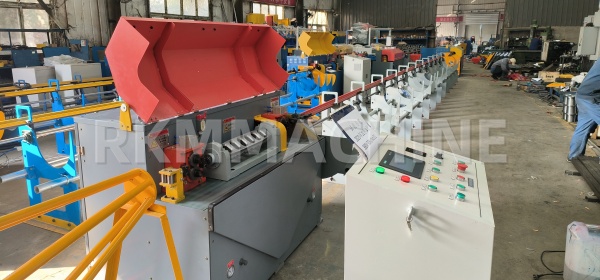
What do you know about wire straightening and cutting machines
What is a Wire Straightening and Cutting Machine?
A wire straightening and cutting machine is a specialized piece of equipment designed to remove bends and distortions from wires while cutting them to exact lengths. Unlike traditional manual methods or semi-automatic tools—such as abrasive saws—this machine offers superior efficiency and precision. Machines in this category vary widely:
- By Automation Level: Ranging from manual and semi-automatic to fully automatic CNC models.
- By Wire Type: Suitable for various materials including rebar, copper, and aluminum wires, tailored to meet different industry requirements.
Working Principles & Key Components
The process behind these machines is a blend of advanced mechanics and digital control. Here’s how they work:
- Feeding: Wires are smoothly fed into the system.
- Multi-Roll Straightening: Multiple rollers work together to eliminate any curvature, ensuring the wire is completely straight.
- Length Measurement: A high-precision servo control system measures the wire to an exact length with tolerances as tight as ±0.1mm.
- Cutting: Depending on the model, cutting is performed via hydraulic, pneumatic, or even laser technology.
- Output: The finished product is either collected as a straight coil or cut into individual segments.
Key components include:
- Straightening Rollers: Their material and arrangement directly affect the straightening quality.
- High-Precision Servo System: Ensures that each cut meets stringent length requirements.
- Cutting Tools: Options such as round blades or laser heads are chosen based on application needs.
Customer Needs & Applications
Different industries have distinct demands when it comes to wire processing:
- Construction: High-volume processing of reinforcing bars demands robust machines capable of handling thicker wires (e.g., 12mm and above) with consistent output.
- Automotive Manufacturing: Precision is paramount for producing intricate wire components without surface damage.
- Home Furnishings and Hardware: Flexible solutions are needed for small batch production and multi-specification requirements—fast mold changes are a plus.
- New Energy: For cutting copper or aluminum wires, anti-oxidation and static protection features become crucial.
- Specialized Applications: Custom processing for uniquely shaped wires (like wavy patterns) or ultra-hard materials (such as titanium alloy wires) poses unique challenges that advanced machines can address.
Advantages & Challenges
Advantages:
- Increased Efficiency and Throughput: These machines can process wires 5-10 times faster than traditional methods, significantly reducing labor costs and material waste.
- Superior Product Quality: Consistent straightening and precision cutting lead to high-quality end products.
- Material Savings: Optimal utilization of wire reduces scrap and improves overall cost-effectiveness.
- Versatility: They can handle various wire types and production scales, making them adaptable to many industrial applications.
Common Challenges:
- Initial Investment vs. Long-Term Return: Balancing the upfront cost with long-term efficiency gains is essential.
- Compatibility: Ensuring the machine can process multiple materials and wire diameters.
- Maintenance Complexity: Components such as straightening rollers may require frequent monitoring and replacement.
Best Practices for Operation & Maintenance
Operating these machines is straightforward with modern, user-friendly control interfaces. To ensure optimal performance:
- Follow Safety Protocols: Regularly inspect protective devices, test emergency stops, and ensure operators are well-trained.
- Extend Equipment Lifespan: Maintain a routine cleaning and lubrication schedule for rollers, monitor blade wear, and calibrate sensors periodically.
- Troubleshoot Promptly: Address issues like inaccurate cutting lengths (potentially due to encoder malfunctions) or surface scratches on wires (possibly from uneven roller pressure) quickly to minimize downtime.
Market Insights & Buying Guide
When selecting a wire straightening and cutting machine, consider:
- Technological Innovation: Look for features like IoT integration and AI-driven diagnostics that offer automatic fault detection and remote monitoring.
- Energy Efficiency and Sustainability: Machines designed for low energy consumption and environmental friendliness are increasingly popular.
- Customization and Flexibility: Ensure the machine covers the desired wire diameter range (e.g., 0.5mm-20mm), cutting accuracy, and production capacity.
- Additional Features: Automated feeding systems and data recording with Industry 4.0 interfaces can add significant value.
Future Trends
The industry is moving toward smarter, greener manufacturing solutions:
- AI-Powered Visual Inspection: Automatic detection of wire defects for even higher precision.
- Energy-Saving Motors and Modular Designs: Enabling quick changeovers and improved adaptability.
- Integrated Waste Recovery Systems: Emphasizing green manufacturing by incorporating scrap metal recycling into the production process.
Conclusion
Wire straightening and cutting machines are at the heart of modern industrial production, enabling high-efficiency, precision processing of various wires. Whether you’re in construction, automotive manufacturing, home furnishings, or new energy, selecting the right machine can significantly improve your production standards while minimizing waste. As technology continues to advance, these machines are set to become even smarter, more energy-efficient, and customizable—empowering your business to meet evolving market demands.
By understanding the fundamentals and staying updated on industry trends, you can make an informed decision that enhances your production efficiency and quality. What do you know about wire straightening and cutting machines? Now you do!
 Spanish
 English
 Russian
 Arabic
 Hindi
 Persian
 Portuguese
 French
 Panjabi
 Turkish
 Urdu
 Vietnamese
 Ukrainian
 Thai
 Kazakh
 Polish
 Romanian
 Danish
 Korean